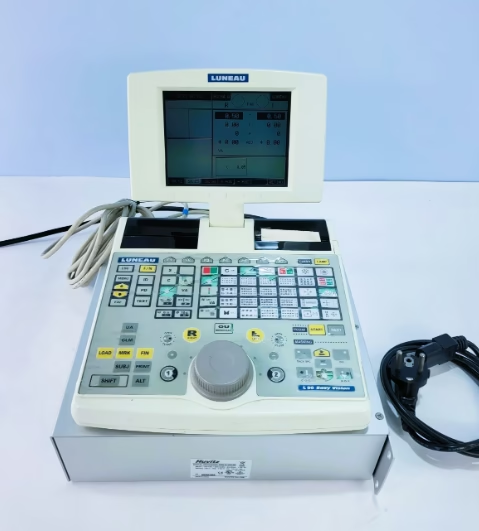

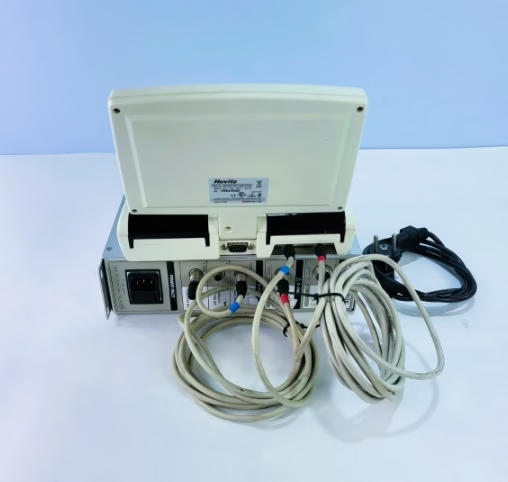
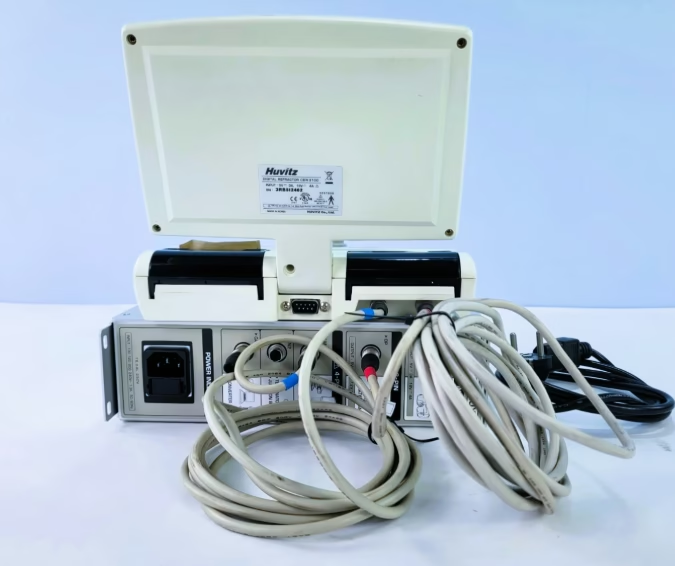
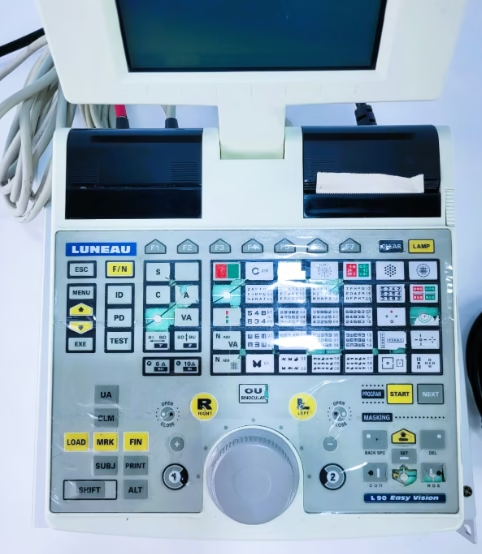
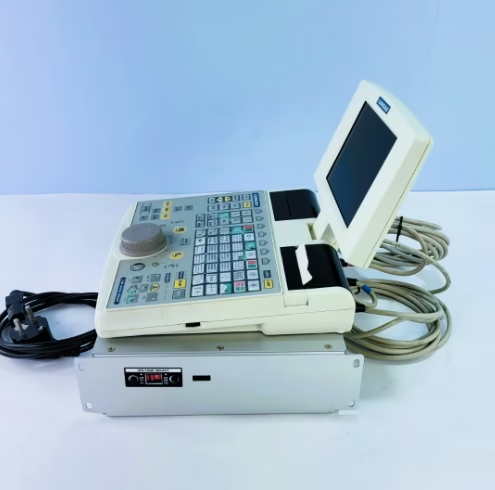
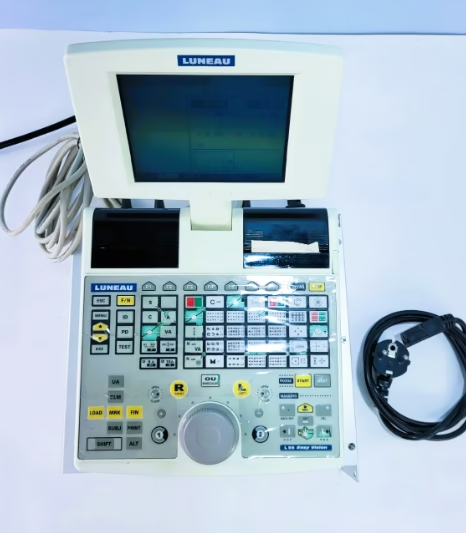
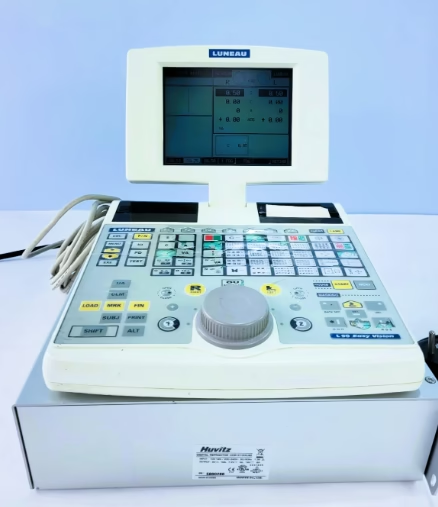
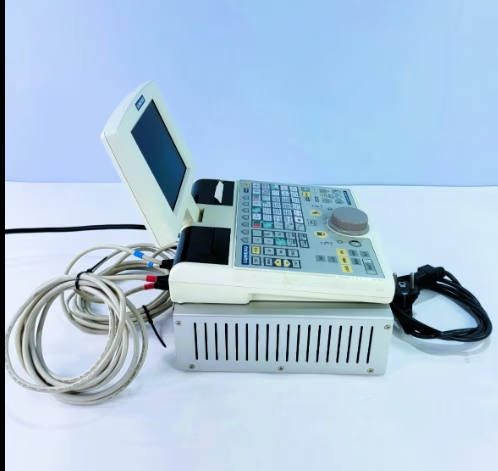
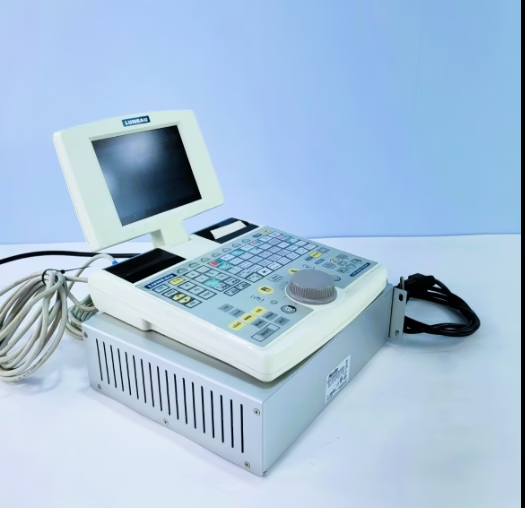
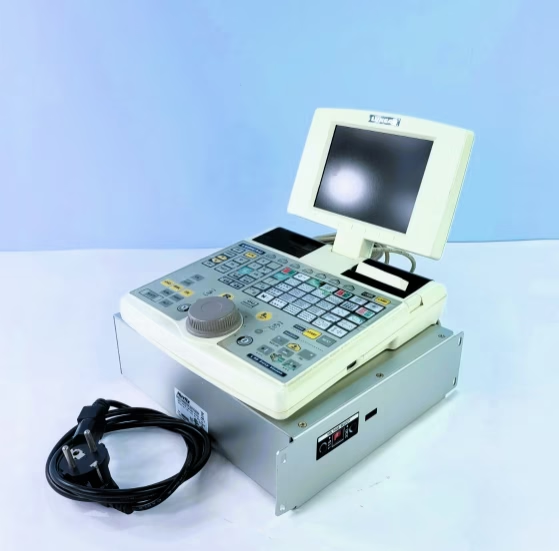
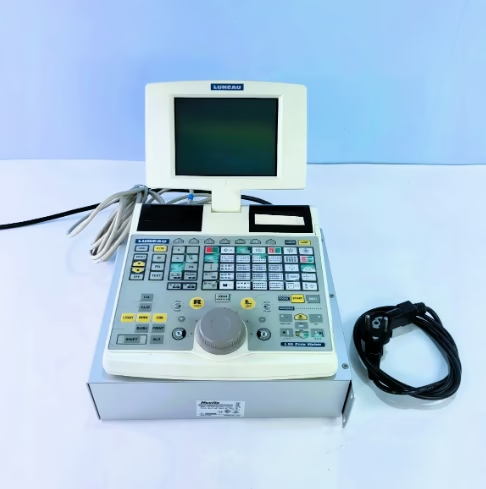
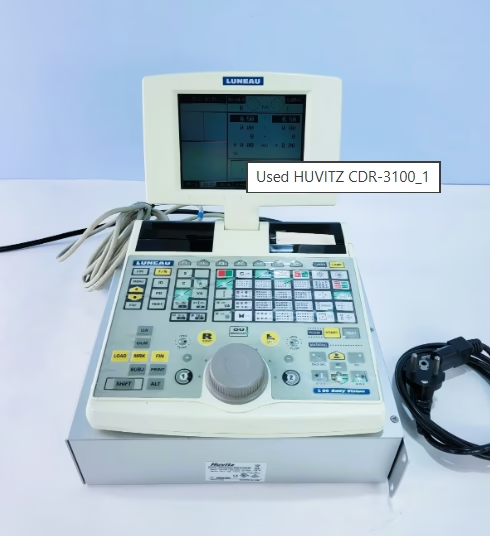
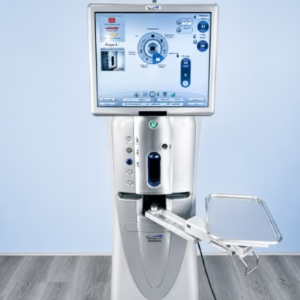
HUVITZ CDR-3100(JB) Digital Refractor
850,00 €
1 in stock
Description
HUVITZ CDR-3100(JB)
Digital Refractor/phoropter controller with Juction box
Tested functional
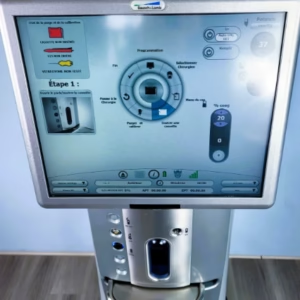
Fair condition, as it is in the photos
Core Features
- Digital refractor (automated phoropter)
- Motorized lens changes for fast and smooth refraction
- Eliminates manual dial operation → improved ergonomics
- High precision refraction
- Sphere, cylinder, axis adjustments with fine steps (typically 0.25 D)
- Wide measurement range (approx. up to ±20 D depending on configuration)
- Synchronized cross cylinder
- Automatic Jackson cross-cylinder rotation
- Faster and more accurate astigmatism refinement
Ergonomics & Workflow
- Fully digital control
- Operated via control panel or tablet (depending on setup)
- Simplified workflow for practitioners
- Fast lens switching
- Smooth and silent transitions between lenses
- Reduces exam time
- Patient comfort
- Natural near-vision position with convergence
- Minimal mechanical noise and movement
Connectivity & Integration
- Data integration
- Can import measurements from:
- Auto-refractometers (ARK)
- Lensmeters
- Export results to EMR systems
- Can import measurements from:
- Digital ecosystem compatibility
- Designed to integrate with Luneau / Visionix refraction units and charts
Optical & Functional Components
- Auxiliary lenses included
- Maddox rod (horizontal/vertical)
- Polarizing filters
- Red/green filters
- Pinhole, occluder
- Prisms (for binocular vision tests)
- PD adjustment
- Adjustable interpupillary distance (approx. 48–75 mm range typical)
- Prism testing
- Built-in rotary prisms for binocular vision evaluation
Build & Reliability
- Robust construction
- Designed for intensive daily use
- Long lifespan with stable calibration
- Precision optics
- Multi-coated lenses for clear and accurate results
Key Advantages (in practice)
- Faster refractions (higher patient throughput)
- Reduced practitioner fatigue (no manual knobs)
- Better repeatability and accuracy
- Easy integration in a digital exam lane
Related products
-
-
Sale!
- Ophthalmology
BAUSCH & LOMB Stellaris Phacoemulsifier
- Original price was: 8990,00 €.7650,00 €Current price is: 7650,00 €.
-
Sale!